

3 Common Misconceptions of Traveling
The benefits of traveling are of great magnitude, but they can also be misconceived. I have heard so many people say that they can’t travel or take their family on vacation because they don’t have the money or time. However, traveling can inspire the life paths and brain development of children and adults alike. I want to discuss the top three misconceptions of traveling that I hear regularly as an educator and as a traveler.

1. Traveling is for the Rich
When Sean and I started our careers in education, I was teaching at an affluent high school south of Atlanta. Sean taught at a very low socioeconomic status middle school about 10 miles away. It always struck me as fascinating and disturbing to see that even though the mileage between the schools was minimal, those children lived in worlds far apart.

Sean and I would share daily stories about the students we taught, comparing their differences and similarities. One of the main differences that we noticed was how these children traveled. Sean actually had students who had never left the city limits of their town. My students were flying to Europe and Asia for spring break. Let me stress, the schools that the children attended were less than 10 miles apart.

It was through sharing stories of our students’ travels that we really discovered how much a person’s socioeconomic status affects their life. Lower socioeconomic children are not born with a lower intelligence quotient. However, data suggests that these children most always underperform on tests and in school compared to their wealthier peers.

This left Sean and me in a conundrum when we decided to begin our family. We were school teachers. We were middle-class America. Our personal children would not be flying to Europe and Asia on spring break. We both wondered, “How can we give our children the same opportunities for exposure as those parents who make vast amounts of money?”
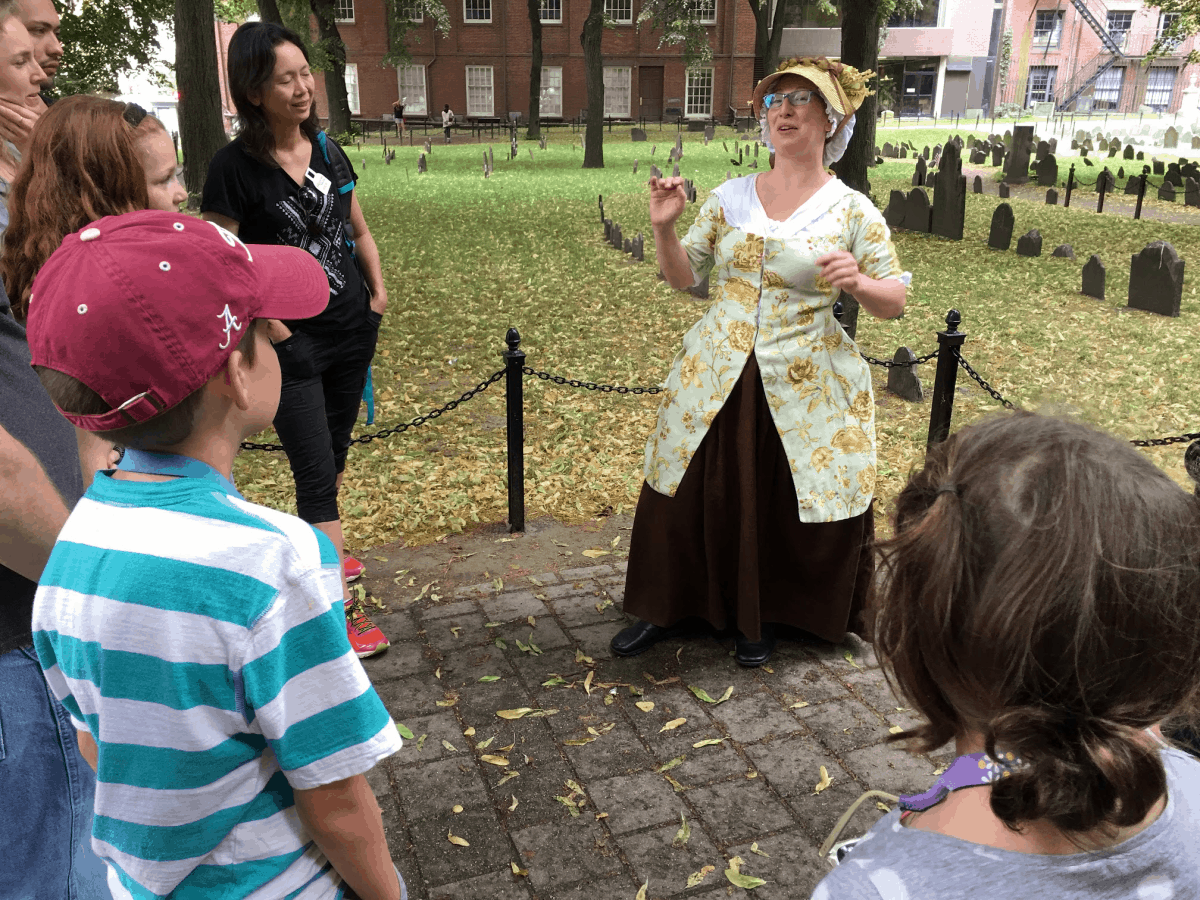
As Sean and I continued into our graduate studies, the answer to our socioeconomic problem became very clear. The problem is NOT that our children won’t receive the upper hand because we were of a lower socioeconomic status than millionaires.
The problem is that people must learn about the power of exposure and use the resources they have to make the best of all aspects of their family’s lives. I mean, Cat and Jack from Target clothe children as well as Polo and Burberry. Grilled chicken from home nourishes a family as well as chicken under a brick from the Sundial. A trip to the aquarium can be just as inspiring for a child as a trip to New York City.
What makes the difference is the exposure that children and adults receive. This begins and ends with the initiative of the parent to expose their children, regardless of socioeconomic status or life circumstance. You do not have to be rich to travel. However, you do have to be willing to unveil to your children something more than the city limits of their town.

2. Mileage Makes a Difference
Another misperception regarding travel is that because you can’t afford to go on some luxury vacation, that you can’t provide the opportunities for exposure that your family needs.
I was speaking with a friend recently, and she told me that her husband didn’t have any money growing up. His family was extremely poor. Yet his parents had initiative and made it a point in life to take their children to the library on a regular basis. Because of this exposure to the library, the children learned so much more than their parents could have ever imagined.
The children are all very successful professionals today. For that family, traveling meant the local library, and the souvenirs were the books that they checked out. For that family, traveling to the local library meant raising successful children.
For the human brain, learning occurs when we do something repetitively. At first, it is difficult for all brains to make solid connections. Take, for instance, a baby learning how to walk. That baby does not just wake up one day and decide to walk. It takes practice. First, the baby stands, then falls, and the cycle repeats until the brain signals get so strong, that soon the baby can walk without the fear of falling. They then can begin skipping and running.
The same happens with traveling. Adults and children must train their brains to absorb the world around them. As people’s minds become used to new and different settings and destinations, the signals become stronger. This strengthening lends itself to easier learning.
People form new knowledge and learn easier because of visiting new destinations. The eight, ten, and twenty-year-olds who go out of town for the first time and ask if a large lake is the ocean are at a large disadvantage in training their brains compared to those who have prior experiences. Unfortunately, this happens far more than you would ever expect.

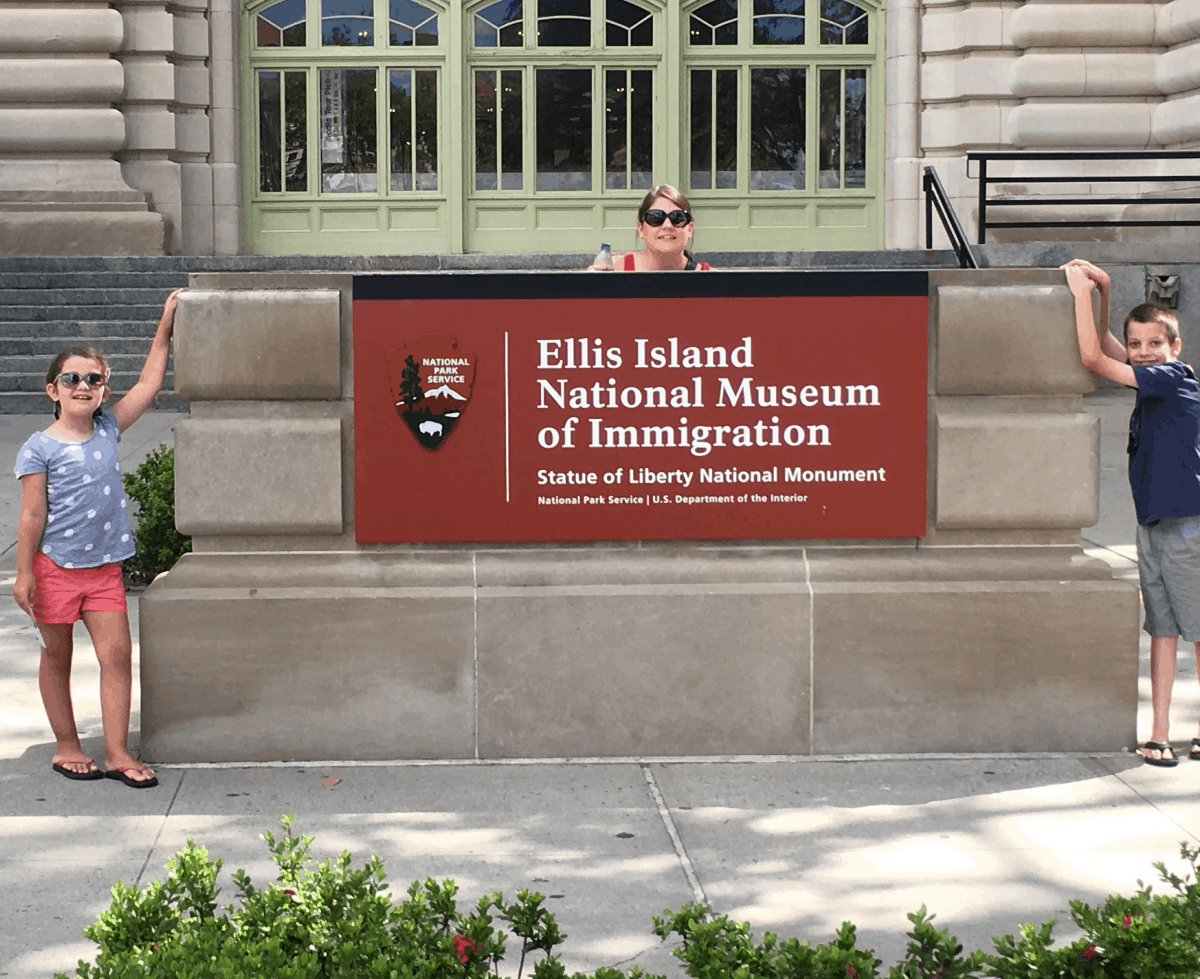
Lucky for everyone who does not have large piles of money lying around, the brain does not have an odometer. It does not distinguish experiencing new destinations, whether they happen 10 miles away or 3,000 miles away. People misconceive that you have to go far to travel. Head to your local state park or to the nearest library… just somewhere you can create new experiences in your family’s brains that will lead to stronger learning. The main key is exposure to the new and different.

Recently, I was working on reading with a group of children who read well below grade level. We were discussing a text about a boy their age who lived in Manchuria. The book had bright pictures and loads of information. However, the students still had difficulty comprehending when we were discussing the dwellings of the boy. The boy lived in a Mandarin ger.
When I saw that the children were having difficulty, and knowing how the brain works, I tried to relate the ger to something that the children already knew. A brain learns easier when it can connect to prior knowledge. I was asking the children if they knew what a yurt was or if they had ever been to our local state park where they could see one.
One child in the group knew what a yurt was, and he was able to automatically connect it to the ger. That child had no difficulties with the rest of the story. He was the lowest reader in the group, yet that student comprehended well beyond the others because he had the prior experience. Why did he have prior experience? Because his mom took him to the state park last summer that is located five miles away.
I must mention the increase in this child’s motivation as well. Although that child was the lowest academically performing student in this group, his motivation for learning skyrocketed because he had prior knowledge. The student was confident and had something to contribute.

3. I’m Too Old or My Kids are Too Young
Dementia and the decline of cognition is not just something that adults should chalk up to old age. Active brains go to war and fight dementia because they keep the brain busy learning. Elderly who travel and who keep educating their brains are more likely to resist the onset of dementia because their brains remain sharp. Sharp brains lead to resilience of impaired cognition.
Adults can complete crosswords and other puzzles that work the brain but what can compare with your brain taking in new visual and auditory information from traveling? An older brain may have to work harder than a younger brain, but it still has the capacity to learn.
We took my grandmother to Mexico last year, and this was a very intentional decision. We were not taking her to party and gamble. We took my grandmother so that she could take in new experiences and so that her brain could continue to learn from new surroundings.

Where it takes adults a little longer to learn new material than younger children, those younger children are sponges. For people who say that their children are too young to travel, I say there is no such thing. As mentioned above, the brain is much more likely to retain visual information than any other type. A child does not have to know how to read or write in order to learn. As a matter of fact, the amount of learning that occurs from the ages of 0-5 years old is tremendous. We in education call this environmental learning.
I wish I could convey how important it is that a child receives exposure to travels when they are young. I often tell people that children are not born knowing how to cuss or to be a bully; it is taught… by the child’s environment. In the same way, if children receive new and exciting experiences, they THEN have the upper hand in being successful in school.
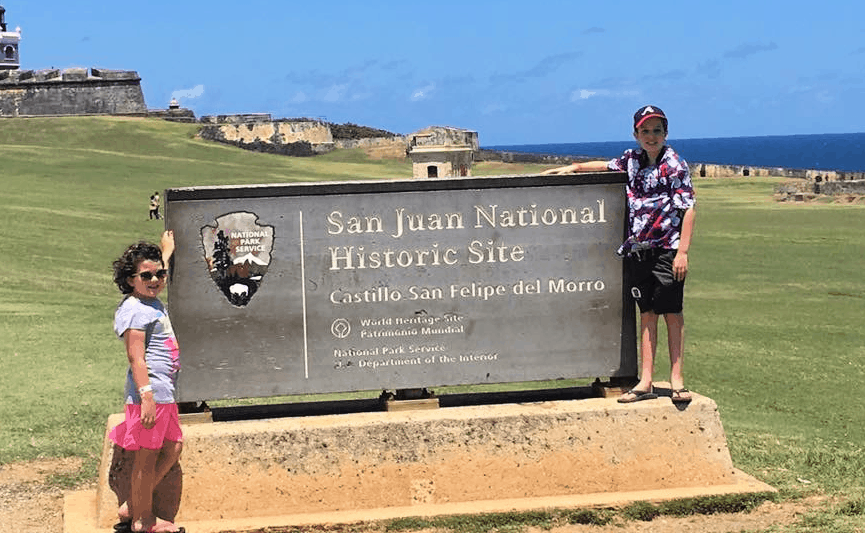
I have heard all too often when a parent tells teachers that it is the school’s responsibility to teach their child. However, I have worked in school districts where the majority of field trips were canceled a decade ago, and children never leave their hometown. What predisposition do those children have now?
Teachers give all the opportunity they can to children for 180 days a year within the confines of their four classroom walls. However, no textbook or video clip can replace learning through true exposure. And going back to the money aspect… rather than giving a child an expensive pair of shoes for their birthday, or the latest video game, give them the opportunity of experience. You can buy an annual family membership to Zoo Atlanta for half the price of an X-Box or Play Station. Make their youth and experiences count.

Traveling doesn’t have to be expensive, you don’t have to go far, and any age can do it. However, you do have to be knowledgeable that options exist. For this reason, Sean and I wrote an e-book on free and low-cost travel for over 100 destinations in the Southeast to visit. Feel free to sign up for a FREE copy at the bottom of the page. Traveling is not an endless party to us, it is intentional. Travel not only keeps our kids’ brains sharp, but it also keeps our brains sharp as well. If you don’t want to go far, go to your local park or library. Go to a new restaurant or on a picnic. More than anything, just go…





Another good article. This one made me think about our own situation as full timers and work campers. Thanks
We would love to be full time some day!!! That is wonderful 😃 Learning never gets old!
Such a great article of information. I love your blog!
Thank you so much 😃
Great post, I totally agree!
Thank you!!! 😃
Great post! These are definitely things I hear about traveling a lot. I’m glad you’ve written a post to educate others on how awesome traveling can be!
💗 Alexx | Aesthetics by Alexx
https://aestheticsbyalexx.com
Thank you! I hope we can make a difference! Exposure is so important 😊
So true. People always ask how I afford it. I wrote a similar article. I thought maybe you’d like to read it https://claratheexploradora.com/travel-myths-debunked/
Absolutely! I will take a look now. Thank you for sharing 😊
What a great read Brandi with tons of information! Thanks for sharing! I agree completely 😊
Thank you so very much for reading 😃
A good read. There is sooooo much to see – I think its great when families get out there and see what we have just here in our own backyard! Thanks for your post.
Yes! I agree completely. There are so many adventures awaiting so close by!